What Is a Chief Wellness Officer? Facility FAQ



As a healthcare leader, you understand that one mark of a successful organization is a thriving workforce. A chief wellness officer (CWO) can help you cultivate a happy and healthy work environment for nurses, which can germinate the seeds for improved patient satisfaction and health outcomes.
You may not have heard of this kind of employee, as a CWO is a relatively new position within healthcare organizations. This article provides an overview of the role, answers some of the most frequently asked questions, and outlines five key benefits of adding a wellness officer to your clinical team.
What Is a Chief Wellness Officer? Overview
A CWO — sometimes also referred to as a chief wellbeing officer — is an executive leader who develops and manages an organization’s evidence-based wellness program to address system-wide challenges. This employee helps clinical staff by creating a strong workplace culture that prioritizes their physical, emotional, and mental health.
The health and wellness officer job requires a qualified strategist, an innovative leader, and a champion for change. They should maintain a frontline presence to better understand the workplace experience and must be able to collaborate with their fellow executives to achieve effective, long-lasting changes. A few simple CWO-implemented wellness initiatives could include:
- Establishing work schedules that provide uninterrupted restorative breaks.
- Dedicating a space for a quiet recharge room to meditate or relax.
- Setting aside money in the budget for paid subscriptions to mental health and wellness apps.
What Are the Core Responsibilities of a CWO?
The chief wellness officer job description always includes the prioritization of improving the healthcare working environment and addressing deficiencies that create barriers to staff satisfaction. A CWO is meant to address the environment, not the worker — collecting, analyzing, and addressing data on sociocultural and environmental aspects of the workplace in sole pursuit of employee wellbeing. Their work never involves individual-focused interventions, nor pursues productivity and cost savings as goals.
Who Typically Serves as the CWO?
Executive leaders with extensive experience in the clinical and leadership domains and the organizational expertise to drive systemic change make the ideal wellness officer. Often, they’re highly credentialed individuals with advanced degrees who have a passion for institutional change and reform. To better prepare themselves for the shift from an administrative role focused on patient outcomes, many administrators will participate in specific chief wellness officer training where they may achieve CWO certification.
How Does the CWO Fit Within the Hospital Structure?
The CWO is best equipped to fulfill their responsibilities when they’re given a seat at the C-Suite table, working alongside hospital executives (CEOs and CMOs) to affect institutional change. Given the autonomy to run with their position, they often collaborate with team members beyond the hospital administration, working alongside HR, departmental leadership, safety-oriented nursing committees, and even IT (for assistance with data tracking, for example).
5 Benefits of Hiring a Chief Wellbeing Officer at Your Facility
Now that you know what a CWO is, you’ll gain better insight into this position by learning how it can support the following vital areas of your operations.
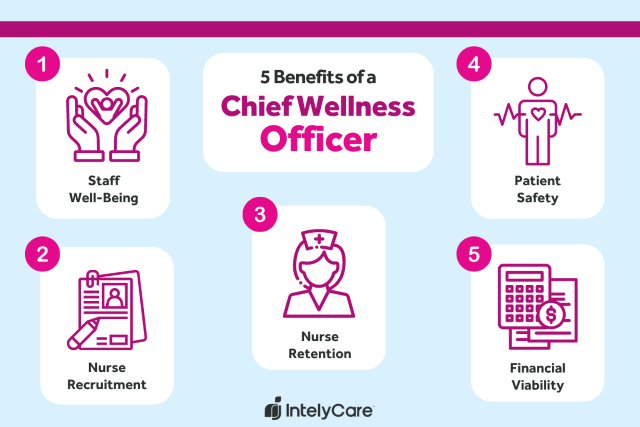
1. Staff Well-Being
A health and wellness officer is responsible for evaluating and supporting the holistic well-being of your clinical staff. For example, nursing professionals are subject to significant workplace stress that, if not addressed, can lead to absenteeism, attrition, and burnout. After evaluating their staff’s needs, the CWO may strategically implement solutions to prevent and repair burnout while encouraging ways to improve overall health.
For an organization to effectively transform an unhealthy work culture, the CWO must repair the systemic root causes. This investment takes time and requires intentional and steadfast work, but your CWO’s dedicated efforts can help you build a stronger, more resilient workforce.
2. Nurse Recruitment
In healthcare, a CWO can have a significant impact on staff recruitment. At the heart of your organization are its mission, vision, and values. The CWO puts these principles into practice when developing your wellness program, which sets the tone for your culture.
Many nursing professionals value a strong workplace culture, and job candidates often look to employee reviews to see if a facility upholds the principles it advertises. An organization that honors and respects its staff through an accomplished wellness program will become popular and attract high-quality candidates, which can quickly make your facility an employer of choice.
3. Nurse Retention
A chief wellness officer enhances your existing nurse retention best practices for your current staff and future hires. CWOs are integral to nurturing the health and well-being of your healthcare team and fostering a positive environment where nurses feel supported and want to stay with your organization long-term.
The integrity of an organization matters to nurses. So when companies don’t keep their promises to aid and improve employee mental health, it significantly increases the risk of staff turnover. A startling 67% of healthcare workers contemplated leaving their jobs when their leaders didn’t fulfill their commitment to their well-being. Utilizing a CWO can earn nurses’ trust and loyalty by implementing initiatives to meet their needs and set them up for success without sacrificing their health.
4. Patient Safety
Safe, quality nursing care is dependent on healthy nurses. A CWO works to implement initiatives that build nurse resilience, which protects their physical and mental health and empowers nurses to focus on what they do best — providing optimal patient care.
When healthcare facilities don’t prioritize nurses’ well-being, it compromises patient safety. For example, nurses with poor physical health or suboptimal mental wellness had a 26% to 71% higher chance of committing preventable medical errors. Fortunately, a CWO can safeguard against this risk by placing the health of nurses at the forefront.
5. Financial Viability
Having a wellness officer adds financial stability to your organization. There are several ways that a CWO can positively influence your nurses’ work environment and strengthen your fiscal well-being. The positive effects a CWO can have on your facility’s financial success are listed in the table below.
|
|
|
|---|---|
| Helps to maintain a stable and sufficient workforce | The efforts of a CWO can decrease recruiting, hiring, and onboarding costs by minimizing staff turnover. |
| Increases nurse job performance and improves quality of care | CWOs promote patient satisfaction and outcomes, leading to increased patient referrals. |
| Decreases medical errors | Focusing on staff wellness reduces associated healthcare costs and legal fees that could result from adverse patient outcomes. |
Need Help Enhancing Your Nurses’ Well-Being?
Now that you know how a chief wellness officer can support your facility, it’s time to start building up your best practices. Don’t miss out on the latest expert resources to help you maintain a healthy and positive work culture at your facility.
IntelyCare writer Diana Campion, MSN, APRN, ANP-C, contributed to the research and writing of this article.